Tree Service Safety & Compliance
OSHA compliance, ANSI A300 standards, PPE requirements, and safety programs that protect your crew and your business.
Understanding Your Legal Obligations
OSHA 1910.269 and 29 CFR 1910.132 set the minimum safety requirements for tree care operations. Here’s what every operator must know.
PPE Requirements
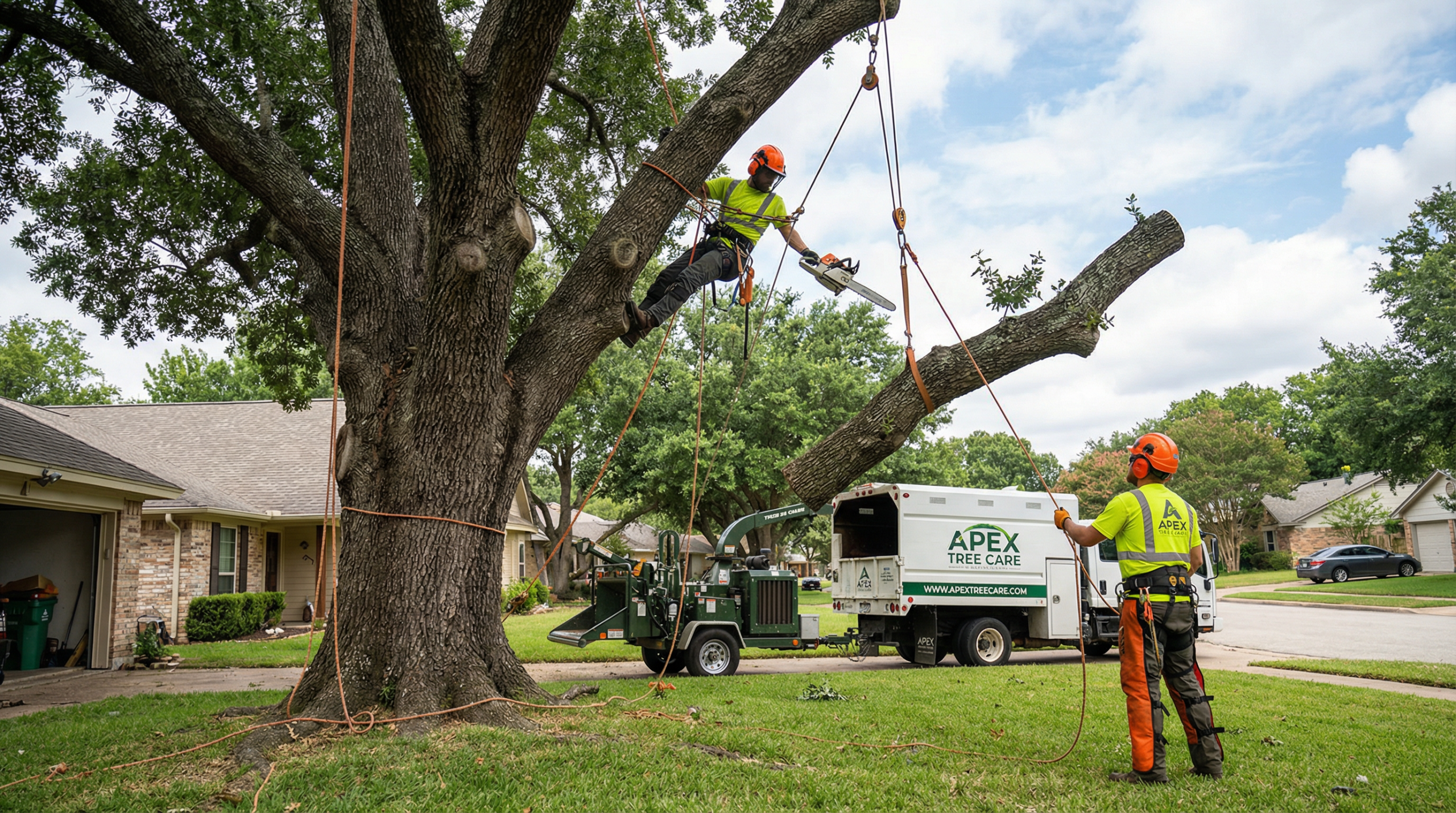
Hard hats (ANSI Z89.1 Class E), chainsaw-resistant chaps (ASTM F1897), cut-resistant gloves, and eye/hearing protection are mandatory for all chainsaw operations. Climbers must use a Class II or III harness meeting ANSI Z133.
Job Hazard Analysis (JHA)
A written JHA must be completed before every tree removal job. It identifies specific hazards — overhead utilities, decay, lean direction, drop zones — and the controls in place. This document is your first line of legal defence.
Utility Line Clearance
Working within 10 feet of energised power lines requires specific OSHA training and written authorisation from the utility company. Violations carry fines up to $156,259 per incident. Always call 811 before any ground disturbance.
Building a Safety Culture
Why Safety Culture Matters More Than Compliance
Companies with strong safety cultures experience 70% fewer incidents than those that treat safety as a compliance checkbox. A safety culture means workers feel empowered to stop a job when conditions are unsafe — without fear of reprisal.
Start with a weekly tailgate safety meeting (10–15 minutes before the first job of the week). Cover one specific hazard scenario, review a near-miss from the previous week, and confirm all PPE is in good condition.
ANSI A300 & Z133 Standards
These are the two most important standards for professional tree care in the United States.
ANSI A300 — Tree Care Operations
The A300 standards define best practices for tree pruning, tree support systems, tree preservation, and integrated pest management. Following A300 is the industry benchmark for professional tree care. It is not a law, but it is the standard against which your work will be judged in any legal dispute.
ANSI Z133 — Safety Requirements
Z133 covers the safety requirements for arboricultural operations, including climbing, rigging, aerial lift operations, and chipper safety. It is updated every five years and is the primary reference for OSHA inspectors evaluating tree care operations.
Have a resource to share?
Tree Service Resources is community-driven. If you have a guide, template, or insight that would help other tree care professionals, we want to hear from you.