Tree Service Insurance & Risk Management
The insurance coverages every tree service company needs, how much they cost, and how to avoid the claims that put companies out of business.
What Every Tree Service Company Needs
General Liability Insurance
Covers property damage and bodily injury to third parties. Minimum $1M per occurrence, $2M aggregate. Tree service GL rates are higher than most trades due to the inherent risk — expect $3,000–$8,000/year for a small operation.
Workers’ Compensation
Mandatory in most states for any company with employees. Tree service workers’ comp rates are among the highest of any trade — typically $15–$25 per $100 of payroll for climbers. Misclassifying employees as contractors to avoid this is a serious legal risk.
Commercial Auto Insurance
Covers your trucks, chippers, and trailers while on the road. Ensure your policy covers the weight and type of all vehicles, including bucket trucks. Personal auto policies do not cover commercial use — this is a common and costly mistake.
Inland Marine / Equipment Insurance
Covers your equipment — chainsaws, chippers, stump grinders, climbing gear — against theft, damage, and breakdown. A single stolen chipper ($25,000–$80,000) can be a business-ending event without this coverage.
Umbrella / Excess Liability
Provides additional coverage above your GL and auto limits. A $1M umbrella policy typically costs $500–$1,500/year and can be the difference between a manageable claim and losing your business. Essential for any company doing commercial work.
Completed Operations Coverage
Covers claims that arise after a job is completed — for example, if a tree you removed was structurally supporting a fence that later collapsed. This is often excluded from basic GL policies and must be specifically added.
How to Reduce Your Claims Risk
Documentation Is Your Best Defence
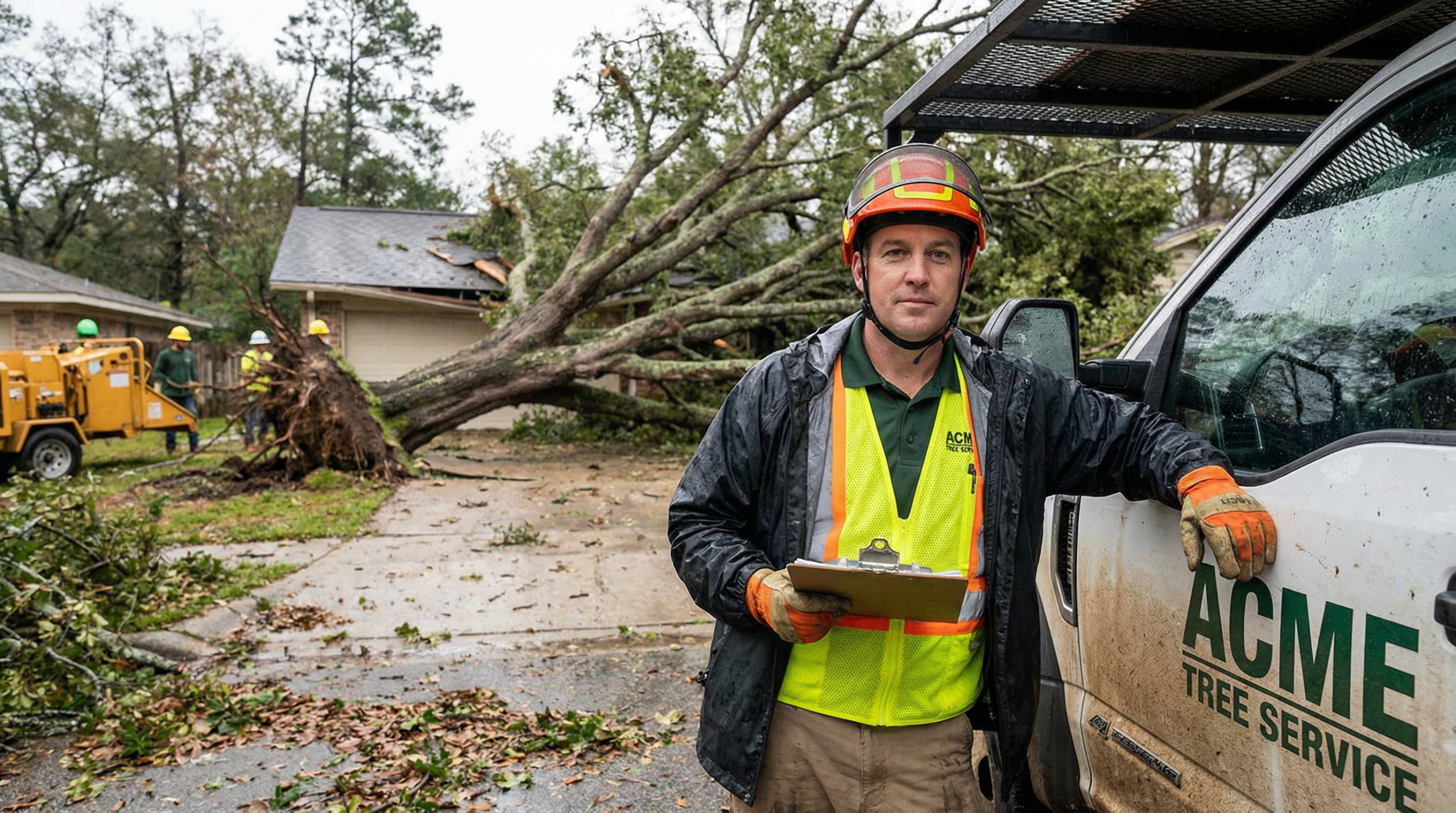
The single most effective risk reduction strategy is thorough documentation. Before every job: photograph the site from multiple angles, document any pre-existing damage, have the customer sign a detailed work order, and complete a written Job Hazard Analysis.
After every job: photograph the completed work, note any conditions discovered during the job, and have the customer sign a completion form. This documentation has resolved hundreds of thousands of dollars in disputed claims.
Have a resource to share?
Tree Service Resources is community-driven. If you have a guide, template, or insight that would help other tree care professionals, we want to hear from you.