Tree Care Industry Standards & Certifications
ANSI A300, ISA certification, TCIA accreditation, and every standard that defines professional tree care in the United States.
ANSI A300 — The Industry Bible
The American National Standards Institute A300 series is the definitive standard for tree care operations in the United States. Here is what each part covers.
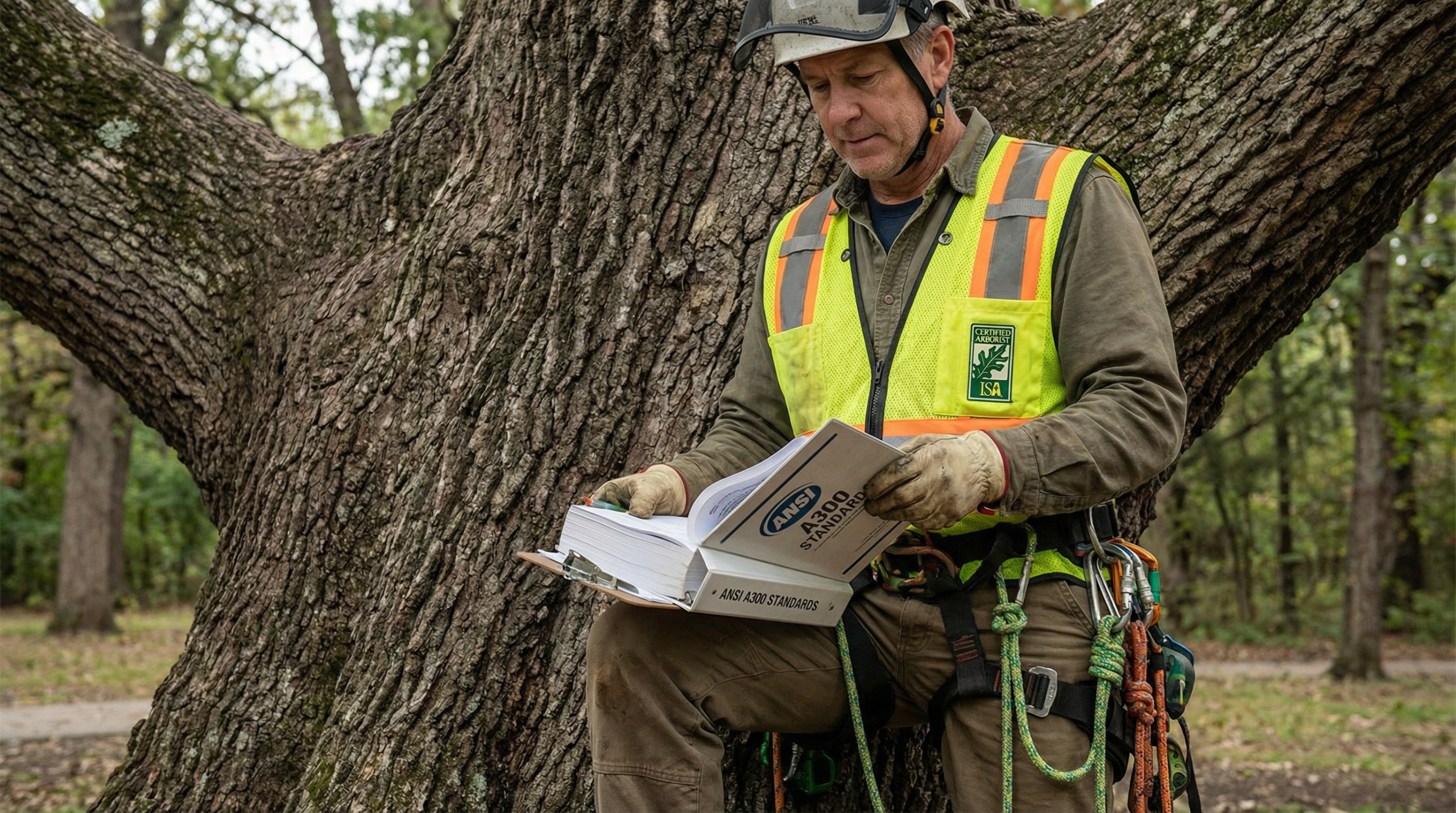
ISA Certified Arborists are trained in ANSI A300 standards and are required to maintain continuing education credits.
A300 Part 1: Pruning
Defines acceptable pruning cuts, pruning objectives, and the maximum percentage of live crown that can be removed. “Topping” is explicitly identified as an unacceptable pruning practice under A300 Part 1.
A300 Part 2: Cabling & Bracing
Covers the installation of supplemental support systems including cables, braces, and props. Specifies hardware requirements, installation methods, and inspection intervals for all support systems.
A300 Part 5: Management of Trees During Construction
The standard for tree preservation during construction projects. Defines tree protection zones, root zone management, and the responsibilities of the project arborist. Essential for any company doing development-adjacent work.
Professional Certifications That Matter
ISA Certified Arborist
The most widely recognised credential in the industry. Requires 3 years of full-time experience and passing a 200-question exam covering tree biology, diagnosis, pruning, soil management, and safety. CEUs required for renewal every 3 years. Recognised in all 50 states and 40+ countries.
TCIA Accreditation
The Tree Care Industry Association’s accreditation programme is the highest business-level credential in the industry. Accredited companies are audited for safety practices, business practices, and employee training. Less than 10% of tree service companies are TCIA accredited.
Have a resource to share?
Tree Service Resources is community-driven. If you have a guide, template, or insight that would help other tree care professionals, we want to hear from you.