Seasonal Crew Scheduling for Tree Service Companies
How to build a year-round crew schedule that handles seasonal demand swings without burning out your team or losing money in slow months.
Understanding the Tree Service Seasonal Cycle
Tree service demand follows a predictable seasonal pattern in most US markets. Spring (March–May) is the busiest period — storm cleanup, spring pruning, and homeowners who’ve been waiting since fall. Summer is steady with storm work and commercial contracts. Fall brings leaf removal and pre-winter pruning. Winter is the slowest period for most residential work, though it’s prime time for dormant pruning of certain species.
Understanding your local version of this cycle is the foundation of smart crew scheduling.
Building Your Core Crew vs. Flex Crew Model
The most resilient tree service operations run a core crew + flex crew model. Your core crew (2–4 people) are year-round employees who handle the base workload and maintain equipment in slow periods. Your flex crew are reliable part-time or seasonal workers you can call in during peak demand.
This model avoids the two most common mistakes: overstaffing in winter (burning cash on idle workers) and understaffing in spring (turning away jobs because you don’t have the crew).
Creating a 12-Month Scheduling Framework
Map your year into four phases:
- Jan–Feb (Slow Season): Equipment maintenance, training, marketing push for spring bookings, dormant pruning for clients who want it
- Mar–May (Peak Spring): Full crew, maximum jobs, prioritise booked clients, manage waitlist carefully
- Jun–Sep (Summer Steady): Core crew + 1–2 flex workers, focus on commercial contracts and storm response
- Oct–Nov (Fall Rush): Pre-winter pruning, leaf cleanup, build the spring booking list
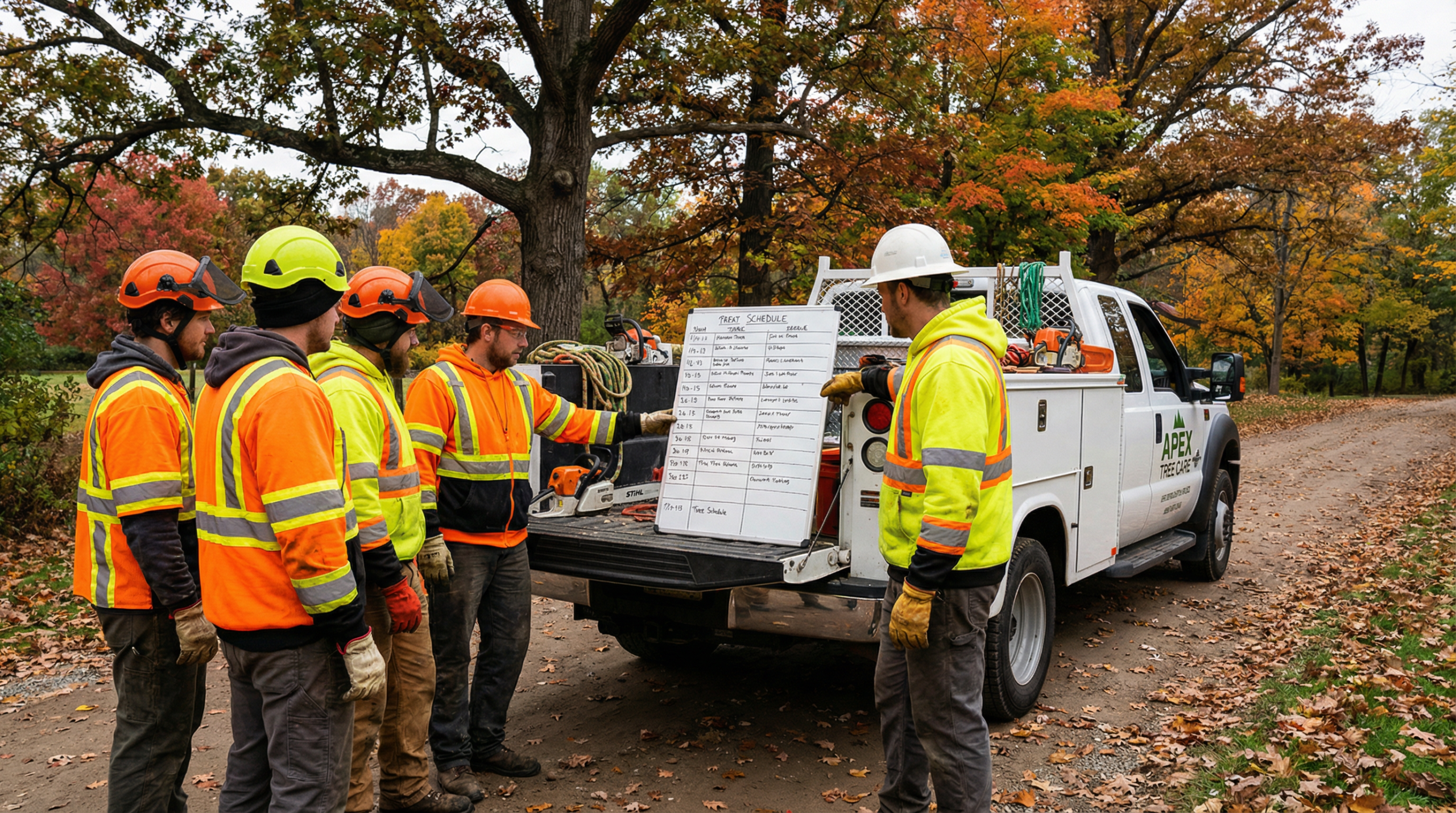
Having this framework written down — even as a simple one-page calendar — lets you make staffing decisions proactively rather than reactively.
Managing Overtime and Crew Burnout in Peak Season
Spring burnout is real in tree service. When demand is high, it’s tempting to push crews to 60+ hour weeks. But fatigued workers make more mistakes, and in a high-risk industry like tree service, mistakes have serious consequences.
Set a maximum weekly hour target (most experienced operators say 50–55 hours is the ceiling for sustained peak season work). Use your flex crew to absorb overflow rather than pushing core crew past their limit. And build at least one full day off per week into every schedule, even in peak season.
Using Technology to Simplify Scheduling
Job management platforms like Jobber, ArboStar, or even a well-structured Google Calendar can dramatically reduce the administrative burden of crew scheduling. The key features to look for: drag-and-drop job assignment, crew availability tracking, and automated client reminders.
You don’t need expensive software to start. A shared Google Calendar with colour-coded crew assignments costs nothing and works well for companies with up to 3 crews.